
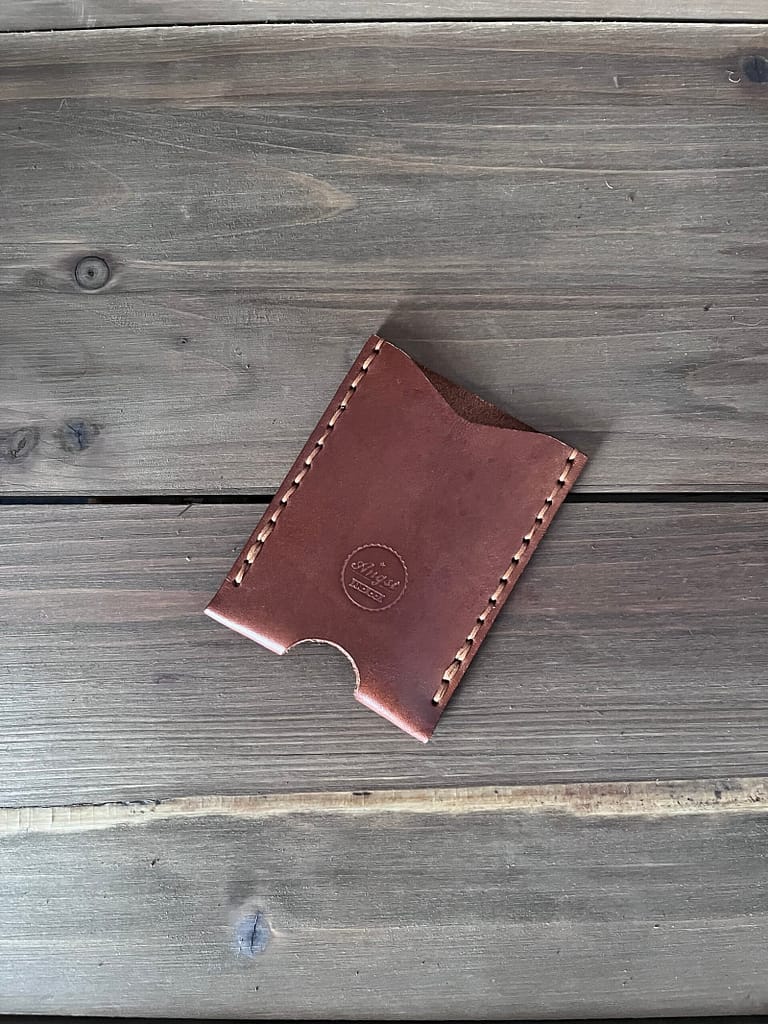
Leather is one of those materials people are naturally drawn to. It feels good, it smells good, and when it’s made well it can last for decades. That’s why Angst and Co. handmade leather goods are built from full grain leather designed to age beautifully.
Many mass-produced products today are made from synthetic materials designed to look like leather. These materials may be labeled as faux leather, vegan leather, PU leather, or bonded leather. While they can look convincing at first, they rarely age well and usually wear out much faster than genuine leather. If you’re curious about the differences, you can read more about full grain leather vs genuine leather.
How to Tell if Leather Is Real
If you’re wondering how to tell if leather is real, the key is to use your senses. Genuine leather has natural characteristics that synthetic materials cannot fully replicate. Real leather usually has a rich, earthy smell, natural variations in the grain, and a soft but durable feel.
You can often identify authentic leather by looking closely at the texture, examining the edges and backing, and noticing how the material ages over time. Unlike synthetic leather, which tends to crack or peel, real leather develops a patina and becomes more beautiful with use.
The four simple checks below will help you quickly spot the difference between real leather and fake leather.
1. Smell
Real leather has a distinctive scent that is difficult to imitate.
Because genuine leather is made from natural hide, it carries a warm, earthy aroma that many people instantly recognize. It is subtle but rich and tends to become more pleasant over time.
Fake leather, on the other hand, often smells like plastic or chemicals. This is because most synthetic leather is made from polyurethane or other plastic-based materials. The smell can be faint on new products, but it often becomes more noticeable as the item ages.
If you pick up a leather item and it smells strongly like plastic, there is a good chance it is not real leather.
2. Texture and Grain
One of the easiest ways to spot real leather is by looking closely at the surface.
Genuine leather has natural variation in its grain. No two pieces are identical. You may notice small wrinkles, pores, or slight imperfections in the surface. These natural characteristics are exactly what give handmade leather goods their character, like a handmade leather front pocket wallet.
Fake leather tends to look much more uniform. The grain pattern is often repeated across the surface because it is stamped into the material during manufacturing. When you run your hand over it, it may feel smooth or rubbery rather than soft and organic.
Real leather also tends to feel warmer and more supple in the hand, while synthetic materials often feel cooler and slightly stiff.
3. Edges and Backing
Another reliable way to identify genuine leather is to examine the edges and the back of the material.
Real leather usually has a fibrous or suede-like underside. The edges often appear slightly rough because they reveal the natural layers of the hide.
Fake leather is typically made from a plastic coating applied to fabric backing. When you look at the edges, you may see layers that appear glued together or a fabric mesh underneath the surface.
The edges are often very smooth and perfectly uniform because they were cut from manufactured sheets rather than natural hide.
4. Heat and Needle Test
If you are unsure whether something is real leather, there are a couple of simple tests that can help. These should always be done carefully and only on a hidden area.
A small amount of heat applied briefly to synthetic leather may cause it to soften or melt slightly because of the plastic content. Real leather is much more resistant to heat and will not melt.
Another method is gently pressing a needle into an inconspicuous area. Real leather may show tiny pores or fibers around the puncture, while synthetic leather often behaves more like plastic.
These tests should be used cautiously, but they can help confirm what you’re looking at.
Why Real Leather Is Worth It
When you choose genuine leather, you are investing in a material that improves with time.
High quality leather develops a patina as it ages, gaining character through everyday use. Instead of wearing out, it slowly becomes softer and more beautiful.
That is why many well-made leather goods can last for decades, while synthetic alternatives often crack, peel, or break down after only a few years. Instead of replacing cheap wallets every year, many people prefer investing in a handmade leather wallet or full grain leather belt that will age beautifully.
At Angst and Co., every piece is made using full grain leather and hand stitching. This traditional approach creates durable goods designed to be carried, used, and appreciated for years to come.
Final Thoughts
Learning how to spot fake leather becomes easier once you know what to look for. Pay attention to the smell, texture, edges, and overall feel of the material.
Real leather has depth, character, and warmth that synthetic materials simply can’t replicate.
If you ever have questions about leather quality or want help choosing a piece that will last for years, feel free to get in touch.
At Angst and Co., every piece is made using full grain leather and traditional hand stitching. If you’re looking for leather goods designed to last for years, you can explore our collection of handmade leather wallets and belts.